01
Discrete structure
Ramsey theory · thresholds
I study when sufficiently large unorganized objects are forced to contain ordered substructure, and when growing random objects acquire such structure with high probability.
Explore this workI’m Bryce A. Christopherson, a mathematician working in Ramsey theory, nonlinear control, and sparse neural networks—three settings shaped by questions of structure, thresholds, and stability.
Assistant Professor of MathematicsUniversity of North Dakota
Research directions
My research spans combinatorics, nonlinear control, and sparse machine learning. Across these areas, I ask what states or structures mathematical objects are drawn toward, and how or why these attractors emerge—whether as the stable state of a dynamical system, a forced substructure in a large object, or a likely substructure in a growing random object.
Ramsey theory · thresholds
I study when sufficiently large unorganized objects are forced to contain ordered substructure, and when growing random objects acquire such structure with high probability.
Explore this workFeedback · stabilization
I investigate when nonlinear systems can be stabilized, and what topological or quantitative obstructions prevent feedback from working.
Explore this workNeural networks · lottery tickets
I develop methods for finding useful sparse subnetworks and study why capable structure emerges inside overparameterized models.
Explore this workSelected publications
Current work on threshold phenomena, nonlinear feedback stabilization, and sparse neural networks.
A score-space method that lets a sparse neural network discover its own effective sparsity while searching for strong lottery tickets.
Project pageA quantitative study of how openness near an equilibrium constrains the gain required from a stabilizing feedback law.
Project pageNecessary conditions for when the Park–Pham estimate improves on the trivial upper bound, together with sufficient conditions for asymptotically exact information.
Project pageA transfer principle showing when threshold bounds survive conditioning, with formulations for finite posets and permutation patterns.
Project pageTeaching & mentoring
I want students to leave a mathematics course able to do more than recall information: to ask better questions, persist through failed attempts, and work their way toward genuine understanding.
Read my teaching philosophyFall 2026
Current coursesReading, writing, and critiquing mathematical arguments through logic, set theory, relations, functions, and proof techniques, offered in separate on-campus and online sections.
A graduate course in nonlinear dynamics, phase portraits, bifurcations, and chaos.
View the full course archiveGraduate advising · Undergraduate research
I advise graduate students and maintain an active undergraduate research group, with projects connecting theory, computation, and real systems.
Meet the groupAcademic record
Full publication record, current projects, and research-group members.
→ServiceUniversity & departmentCommittee leadership, faculty searches, assessment, and student support.
→PresentationsTalks since 2014Research seminars, professional meetings, colloquia, and invited talks.
→About
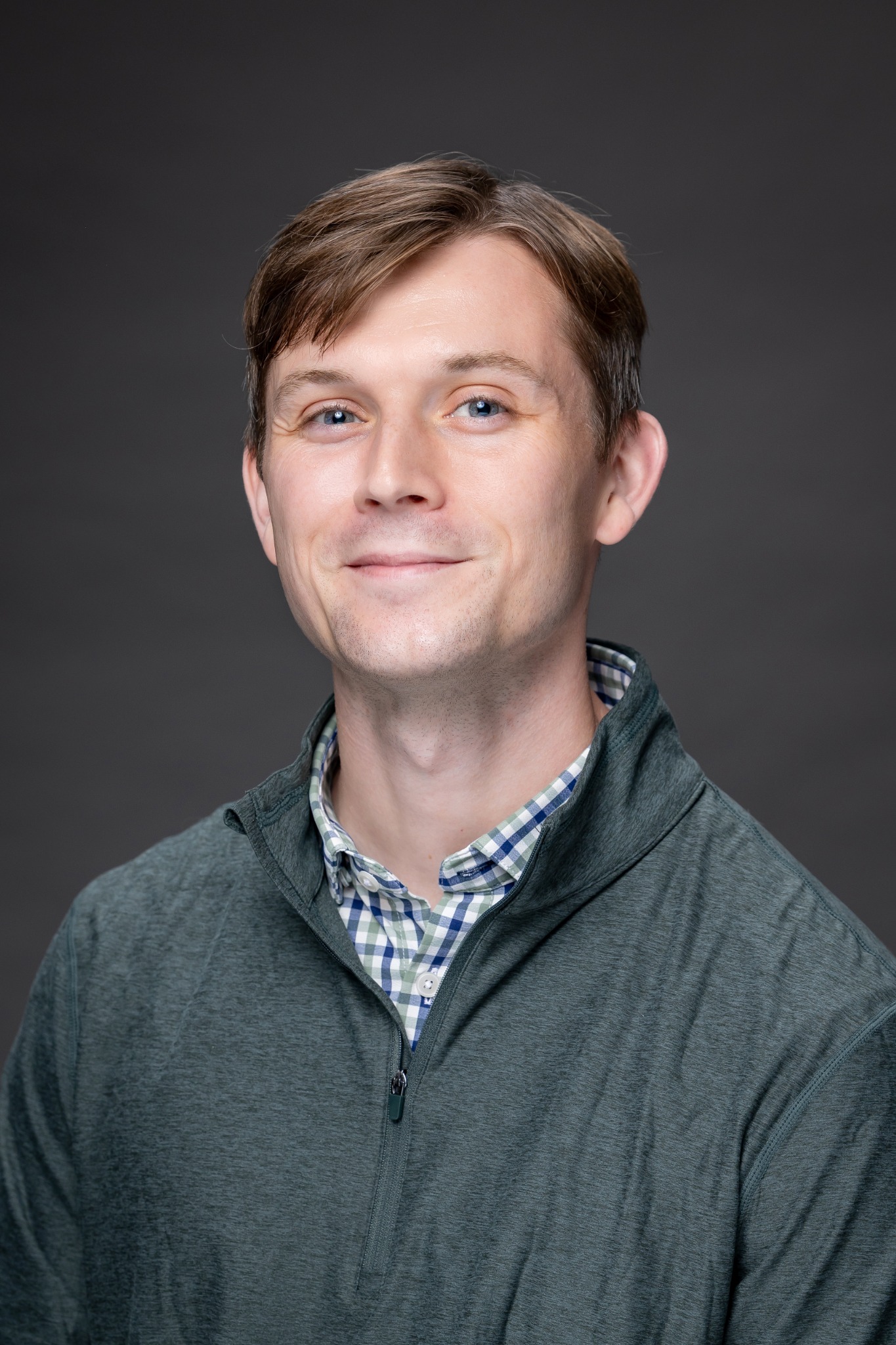
Assistant Professor of Mathematics
University of North Dakota
I work across pure mathematics, applied mathematics, and computation.
My research includes feedback stabilization and its topological obstructions, Ramsey theory and probabilistic thresholds, and the extraction of sparse subnetworks from neural networks. I use both theoretical and computational methods, often in collaboration with students.
Find me elsewhere